

When a platform says it is free, a district finance officer goes looking for the catch, and that is the right instinct. Somebody is paying for the software. The question worth asking is who, and the answer is what separates a fundraising platform that keeps 100% of donations from one that only says so.
The short answer: a fee-free fundraising platform takes no platform cut at all. Schoolfundr, our fee-free fundraising platform, is funded by an optional tip the donor can decline at checkout, so schools keep 100% of the funds they raise, minus standard credit card processing fees: Stripe at 2.9% plus $0.30 per donation.
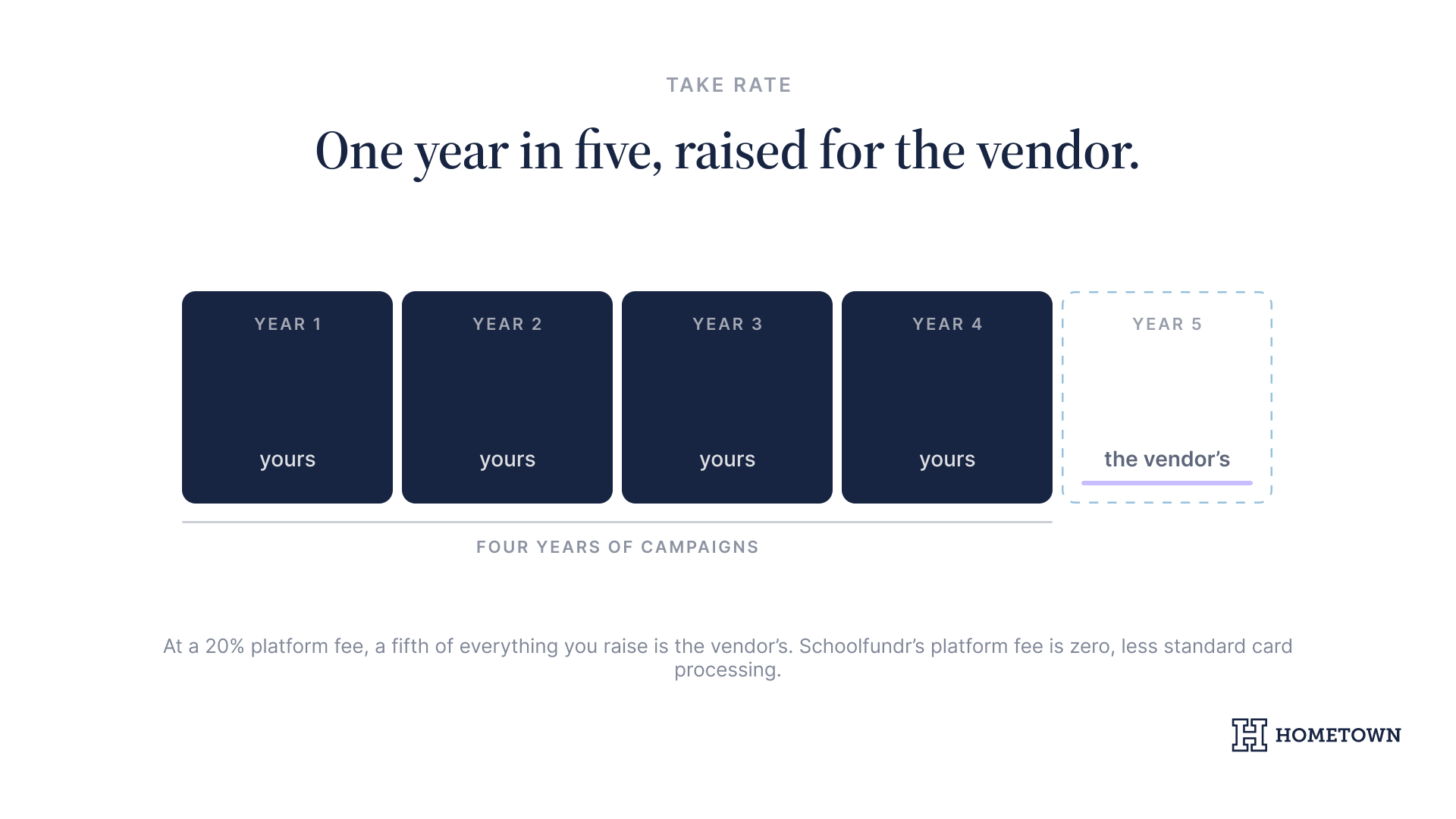
What surprises administrators is usually not that there is a fee, but where it sits. It comes off the top, before the money reaches the program, so it never shows up as a line anybody approved. As K-12 districts shift to zero-fee fundraising, the first thing they do is ask each vendor for that number in writing. Then the arithmetic is easy: if you give up 20% of the funds you raise, you are fundraising for free every five years.
The mechanics of a fee-free fundraising platform
How voluntary gratuity replaces platform fees
The optional tip model is simple. The platform charges the school nothing and asks the donor for a voluntary tip at checkout, which the donor can decline, and the donation completes either way. For the district that means no platform fee, no setup fee, no subscription, and no contract. Schoolfundr fundraising runs on that model, which is why there is no percentage to negotiate.
Donors who think the service is worth supporting pay for it, and the ones who do not simply decline. For anyone managing an athletic budget, reducing fundraising fees is the fastest way to raise net revenue without asking parents for more.
Why donors prefer transparency over hidden deductions
Donors, especially parents and grandparents, want to know their gift reaches the athlete rather than a vendor. A clear checkout process asks for an optional contribution to keep the service free for the school. This transparency builds trust between the community and the district business office.
A parent who gives $50 wants that $50 to reach the team rather than a vendor's margin. With 100 percent donation fundraising it does, less standard card processing. If they add a tip on top, that is their choice and it sits on top, rather than being carved out of the gift. Coaches we speak with describe the financial burden of traditional platforms in those terms: not the percentage itself so much as having to explain it.
Comparing the net impact: modern vs. traditional platforms
How each model takes its cut
The comparison that matters is not the headline percentage. It is where the deduction sits and who decides it.
Ask each provider to fill in its own row in writing. The percentage they write down is the comparison, and it is usually easier to get that way than off a pricing page.
When you evaluate your next campaign, these are the deductions to go looking for in each provider's own paperwork:
- The platform fee, stated as a percentage of what you raise.
- The supplier's share on any product-based fundraiser, which comes off before the program sees a dollar.
- Setup costs and annual subscriptions, which do not scale with what you raise and so hit small programs hardest.
- Payment processing, wherever money moves by card. On a no-fee fundraising platform it is the only deduction left, and schools keep roughly 97% of donations.
Finance teams outside education have a name for this. They read marketplace unit economics by take rate rather than by gross volume, because the headline number says nothing about what anybody kept. A fundraiser works the same way: the total raised is the number people celebrate, and the number the program banks is the one that buys uniforms.
Audit-ready transparency
What the business office actually gets
Every donation is recorded as it arrives, and the cash and checks your staff logs by hand count toward the same goal, so the total on the campaign page is the real total. That is what makes year-end a matter of reading one number rather than rebuilding it from a shoebox.
How the money reaches your account
Ask this one early, because your treasurer will. With Schoolfundr, funds are held until your fundraiser has ended and you are ready to withdraw. At that point you can transfer them to a bank account or a debit card via Stripe, or Hometown can mail you a physical check. Stripe is the payment processor, and its fee of 2.9% plus $0.30 per transaction is the only deduction.
If your district has rules about who may hold funds, which processors are approved, and how money reaches a specific program account, put those questions to every provider before you sign, alongside your questions about fees and contracts. Fundraising strategies for athletic directors covers the campaign side once the paperwork is settled.
Why Schoolfundr?
- Fee-free, not fee-light: no platform fee, no setup fee, no subscription, and no contract. Schools keep 100% of the funds they raise, less any standard credit card processing fees.
- A record built as you go: every gift is logged when it arrives, including the cash and checks entered by hand, so the campaign page and the deposit agree.
- A dedicated fundraising expert: included at no extra charge, which matters more in week one than any feature does.
What to do next: evaluating your next campaign
- Work out what your last three fundraisers actually returned to the program, after every deduction.
- Pick the one program most worn down by product sales and donor fatigue.
- Run a single campaign on the optional tip model and compare the payout against that number.
View Pricing to see exactly what a Schoolfundr campaign costs, which is nothing beyond card processing.
.png)

.png)